
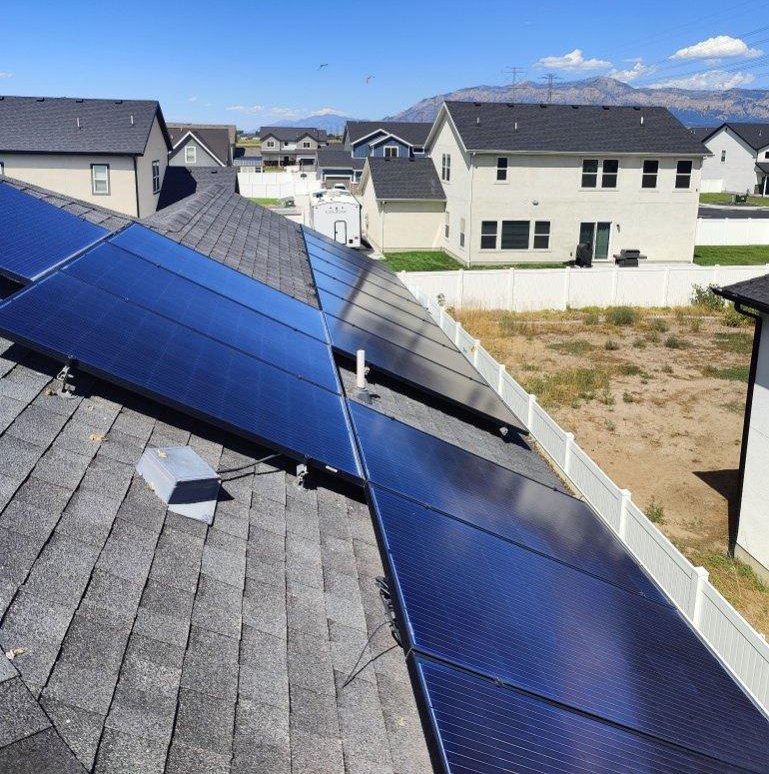
Dirty Solar Panels Are Silently Costing You Money
You invested thousands in solar panels to reduce your energy bills and your carbon footprint. But if those panels aren't clean, they're not performing — and most homeowners have no idea how much output they're silently losing every single day.
- 30%max energy loss from dirty panels
- 2×yearly cleanings recommended for most homes
- 25yravg panel lifespan — cleaning protects it
- 100%safe, no harsh chemicals used
Why solar panel cleaning matters more than you think
Solar panels work by allowing sunlight to pass through a glass surface and reach the photovoltaic cells beneath. Any layer of grime between the sun and those cells directly reduces the electricity your system produces. Unlike a dirty car or window, the performance loss from dirty panels shows up on your energy bill every month.
The culprits are everywhere: pollen in spring, dust in summer, fallen leaves in autumn, bird droppings year-round, and residue from air pollution settling on the glass. Over time these layers compound, and because the decline happens gradually, most solar owners don't notice until they compare their output data to the previous year.
The numbers are real: Studies from the University of California and the National Renewable Energy Laboratory have found that soiling — the industry term for contamination on panel surfaces — is one of the leading causes of real-world solar underperformance, responsible for energy losses ranging from 7% in mild climates to over 30% in dusty or high-pollen regions.
How much output are you losing right now?
The amount of efficiency lost depends on how long since your last clean and your local environment. Here's a general guide:
If you're in the 70–80% range, the cost of a professional clean at Legend Cleaning pays for itself in restored energy production — often within the first billing cycle.
6 reasons to choose professional solar panel cleaning
⚡
Restore peak output
A professional clean can restore your system to near-full efficiency, maximising the return on your solar investment immediately.
🛡️
Protect the glass coating
Bird droppings are acidic and can permanently etch the anti-reflective coating on panels. Early removal prevents irreversible damage.
📋
Maintain warranty compliance
Many solar manufacturers require documented cleaning and maintenance to keep warranties valid. We provide service records on request.
🔒
Safe, professional access
Rooftop panel cleaning is a genuine safety risk. Our trained technicians use appropriate equipment and follow strict safety protocols.
💧
No chemicals, no scratches
We use purified, deionised water and soft-bristle systems designed for solar glass — no harsh products that could damage your panels.
🌿
Eco-friendly process
Purified water cleaning requires no detergents and produces zero chemical runoff — perfectly aligned with the sustainability goals of solar ownership.
Our solar panel cleaning process
Legend Cleaning uses a tried-and-tested approach built specifically for solar panels — nothing is left to chance when it comes to your investment.
- System inspection and output reviewWe assess your panels for soiling levels, check for physical damage, and note any hot spots or areas of concern before we begin.
- Dry brushing of loose debrisLoose dirt, leaves, and dry particulates are gently swept away first — scrubbing dry material directly into wet glass can cause micro-scratches.
- Purified water washWe use deionised, mineral-free water fed through soft-bristle brushes. Purified water leaves no residue or water marks when it evaporates.
- Targeted spot treatmentBird droppings, tree sap, and stubborn stains get targeted treatment using approved, panel-safe solutions without abrasive tools.
- Frame and mounting checkWe inspect frames and mountings for debris buildup, corrosion, or anything that could affect panel integrity and report findings to you.
- Post-clean reportYou receive a summary of work completed, any issues noted, and our recommended next cleaning schedule — perfect for warranty records.
How often should solar panels be cleaned?
By environment type
- Standard residential (low-pollution area) — twice per year; spring to clear winter residue, and autumn before the wet season.
- High-pollen or tree-heavy surrounds — three to four times per year during heavy pollen months.
- Near roads, construction, or industrial areas — quarterly at minimum; particulate pollution settles heavily on horizontal surfaces.
- Coastal properties — quarterly or more; salt spray is corrosive and accumulates rapidly on panel glass.
- Commercial / large-scale arrays — monthly monitoring with professional cleaning every 6–8 weeks depending on output tracking data.
Smart tip: Monitor your solar inverter's daily output readings. A consistent downward trend over weeks — not explained by cloud cover — is often the clearest sign your panels need attention. Legend Cleaning can help you interpret your output data when you book a consultation.
Common myths about solar panel cleaning — debunked
Myth 1: "Rain cleans my panels for free"
Rain does remove some loose dust, but it also deposits minerals and leaves water marks as it evaporates. Bird droppings, pollen, and fine particulates are not removed by rain — they bond to the glass surface and require mechanical cleaning to shift.
Myth 2: "I can just hose them down myself"
A garden hose uses tap water which is full of minerals that leave deposits on the panel surface — making the problem worse over time. High-pressure water can damage panel seals and connectors. And climbing onto a roof without proper safety equipment is simply dangerous.
Myth 3: "Cleaning will scratch or damage the panels"
This is only true if the wrong equipment is used. Legend Cleaning uses soft-bristle systems and purified water specifically chosen to be safe on anti-reflective solar glass. Properly conducted professional cleaning will never damage your panels.
Myth 4: "My panels are tilted so they clean themselves"
Panel tilt helps rain run off, but it doesn't prevent accumulation. Bird droppings, sticky pollen, and fine pollution particles adhere regardless of angle. Even a 20-degree tilt — the most common residential pitch — retains significant soiling over a season.
Frequently asked questions about solar panel cleaning
- How often should solar panels be professionally cleaned?
Twice per year is the standard recommendation for most residential properties — once in spring and once in autumn. Coastal, high-pollen, or high-pollution environments benefit from quarterly service. Commercial arrays often require more frequent cleaning based on output data. - Do dirty solar panels really affect energy output?
Yes, significantly. Soiling is one of the most common real-world causes of solar underperformance. Depending on contamination levels and your local environment, dirty panels can lose between 15% and 30% of their energy production — a loss that accumulates on every energy bill until the panels are cleaned. - Can I clean my solar panels myself?
Light rinsing with a soft brush from the ground is possible for single-storey installations, but it rarely achieves a thorough clean. Tap water leaves mineral deposits, and most homeowners lack the purified water systems needed for a streak-free result. Rooftop access adds genuine safety risk. Professional cleaning delivers better results safely. - What products does Legend Cleaning use on solar panels?
We use deionised, purified water fed through soft-bristle brush systems purpose-built for solar panel glass. For stubborn spots, we apply approved, panel-safe solutions. We never use harsh chemicals, abrasive tools, or high-pressure washers that could damage coatings or seals. - Will professional solar panel cleaning void my warranty?
No — professional cleaning using the correct techniques and equipment does not void solar warranties. In fact, many manufacturers require documented maintenance as a warranty condition. We provide written service records after every visit. DIY cleaning with incorrect products may void your warranty. - How long does a solar panel clean take?
A standard residential system of 20–30 panels typically takes 1–2 hours. Larger arrays or those requiring more intensive spot treatment may take longer. We'll give you an accurate time estimate when you book through legend.cleaning.

.svg)
.svg)

.svg)
- Mon - Sat : 8:00 am-6:00 pm
- Sunday : Closed